A faceless YouTube channel sounds like the perfect plan. No camera. No showing your face. Let AI make the visuals, add a voice, upload, repeat.
Thousands of people had the same idea. That's exactly why YouTube got stricter about it.
You can still build a faceless channel that grows and gets paid. But the "upload 3 AI videos a day and wait" version is the one that gets turned down for monetization. Here's how to do it the way that actually lasts.
What a faceless channel really is
A faceless channel is any channel where you don't appear on camera. That's it. It's not a type of content, it's a way of making it.
Some of the most watched channels on YouTube are faceless. History explainers. Science animations. True crime narration. Gameplay with commentary. Finance breakdowns with charts.
What they have in common isn't the lack of a face. It's that each video has a clear point of view and real effort in the script. The visuals support the story. They aren't the whole story.
What YouTube's rules actually say
Before you pick a niche, understand the rule that decides whether you get paid.
YouTube's monetization policies have a section on inauthentic content (it used to be called "repetitious content"). In July 2026 YouTube rewrote that guidance to make it clearer. It now names three kinds of videos that can't earn money:
- Generic or repetitive content. Videos that look like they're made from a template and barely change from one to the next. Slideshows with little commentary and AI videos that feel mass-produced are examples.
- Unsatisfying or off-putting content. Videos made only to shock or manipulate people for views, or stitched-together clips with no real story.
- AI personas on sensitive topics. An AI character presenting itself as a doctor, lawyer or financial expert giving advice.
YouTube said it wasn't a brand-new rule, just a clearer explanation of the existing one. And it was clear that using AI isn't the problem. AI-assisted videos with real creative input are fine.
The test isn't "did you use AI?" It's "would this video exist if you'd pressed one button?" If the answer is yes, it's at risk.
The rules can apply to your whole channel, not just one video. A channel full of near-identical uploads can be refused monetization, even if each video on its own seems fine.
Step 1: Pick a niche where your angle matters
Good faceless niches share one thing: the value is in the information or the story, not in seeing a person.
Some that work well:
- Explainers: history, science, how things work, geography
- Stories: true crime, mysteries, internet stories, business rise-and-falls
- Breakdowns: finance concepts, product comparisons, film and game analysis
- Tutorials: software, design, cooking with overhead shots
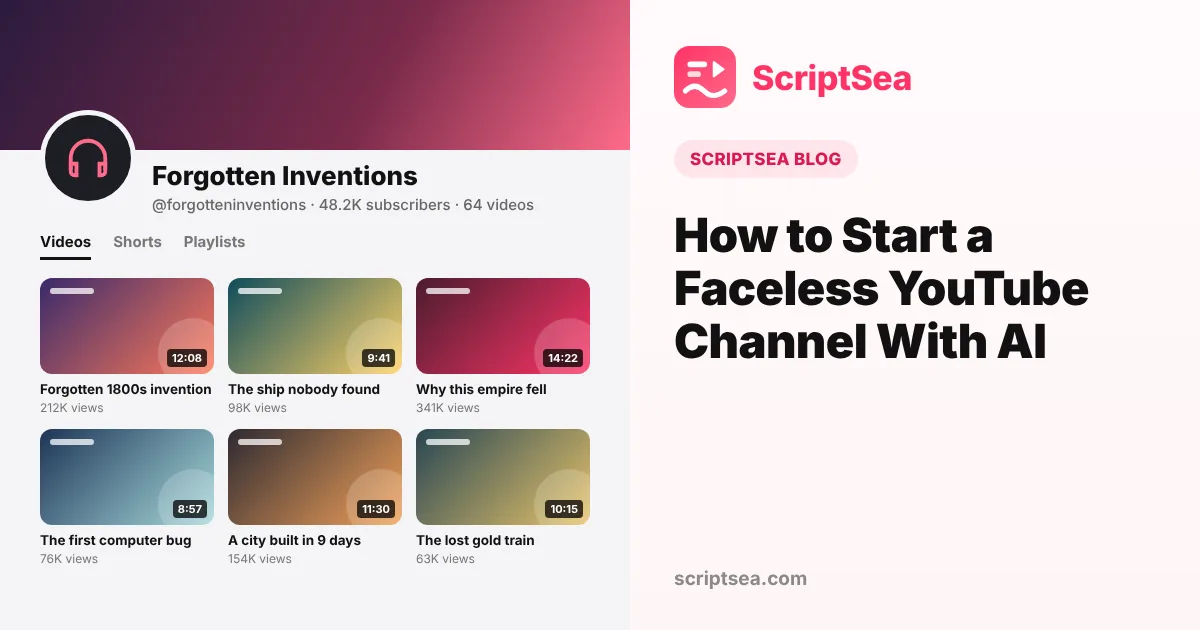
Then add your angle. "History videos" is a niche. "Forgotten inventions that almost changed everything" is a channel. The narrower angle makes every video feel like it belongs to a series, without being a copy of the last one.
A quick check: can you list 30 video ideas in this niche without repeating yourself? If you're stuck at 10, pick something wider.
Step 2: Write scripts that sound like a person
On a faceless channel, the script is the face. It's the one thing that makes your channel feel like it's made by someone.
What makes a faceless script work:
- A hook in the first 10 seconds. Say the most interesting thing first. Not "In this video we'll look at...".
- A clear opinion or angle. "Here's why this failed" beats "here are some facts about this".
- Your own research. Pull facts from more than one source and connect them in a way nobody else has.
- Short, spoken sentences. Write for the ear. Read it out loud before you record.
If you make Shorts as well, the same rules apply, just tighter. We break that down in how to write a YouTube Shorts script.
Our free Faceless YouTube Script Generator gives you a hook-first draft to start from. Then make it yours: add your facts, your opinion and your way of saying things. The draft saves time. Your edit is what makes it original.
Step 3: Pick a voice
You have three options:
- Your own voice. You don't need a face to use your voice. A decent USB mic in a quiet room is enough. This is the safest choice for originality, because no one else sounds like you.
- An AI voice. Fine, as long as it sounds natural and you use it on scripts with real substance. Pick one voice and keep it for the whole channel so people recognise it.
- Text on screen with no voice. Works for some formats, like satisfying process videos or quick lists, but it's harder to hold attention for long videos.
Whichever you pick, keep the pacing human. Pauses before a reveal, a bit of energy on the key line. A flat voice reading a wall of facts is the fastest way to lose people.
Step 4: Make visuals that match the words
Every few seconds, the picture should change to show what's being said. That's what keeps eyes on the screen.
Your options for visuals:
- AI video clips for scenes you can't film, like historical moments or imagined places
- Stock footage for everyday scenes
- Screen recordings for tutorials and software
- Simple motion graphics for numbers, maps and timelines
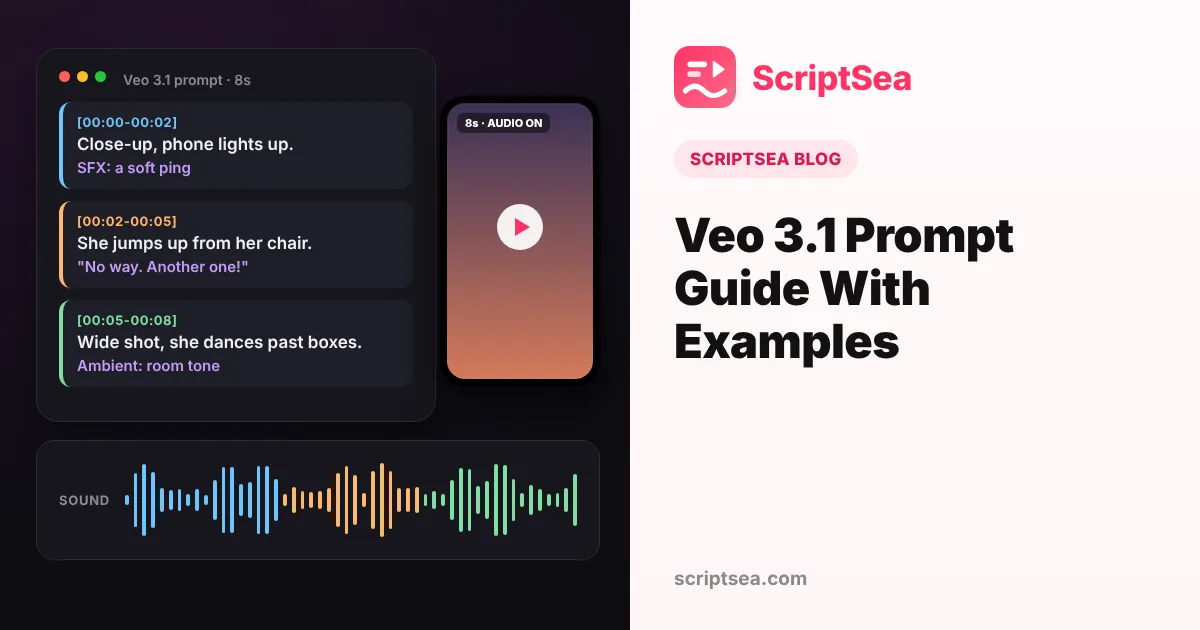
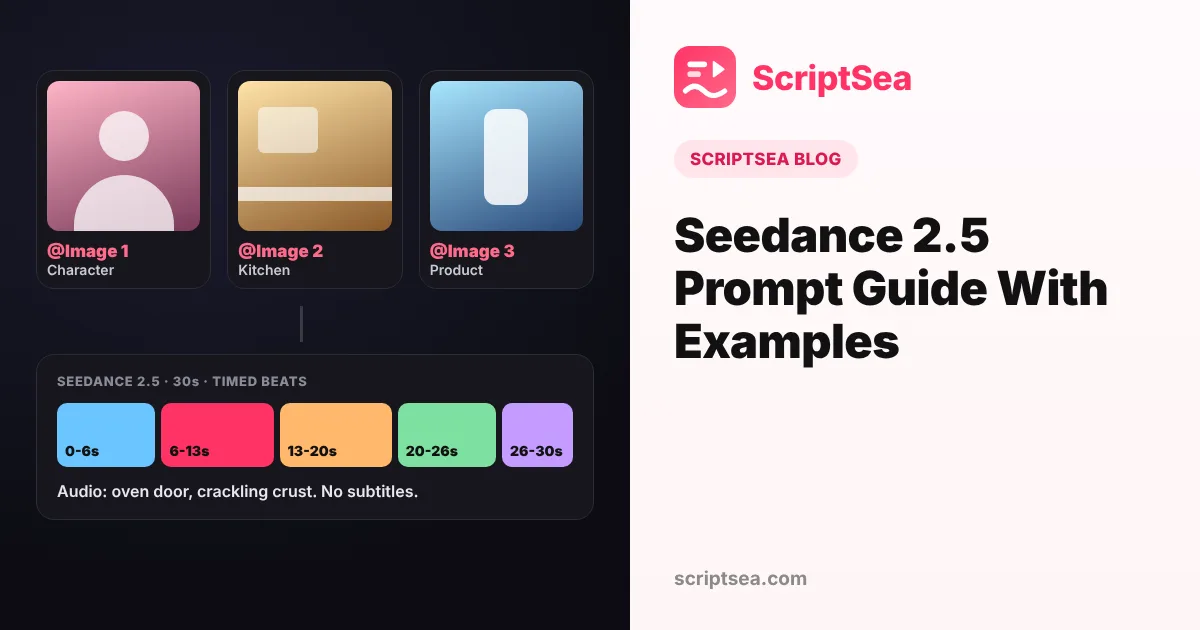
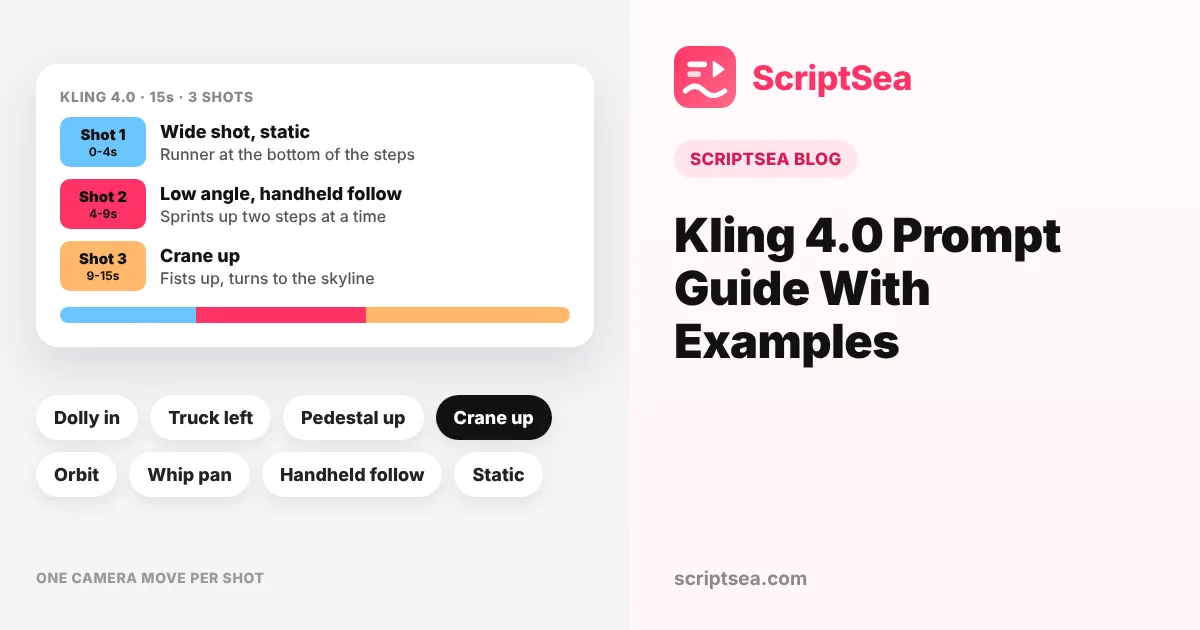
If you use AI video, write one prompt per scene that matches the exact line being spoken. Keep characters and style consistent across clips so it feels like one video, not a pile of random clips. Our guide on how to write AI video prompts walks through it.
Step 5: Upload like a series, not a factory
Posting every day sounds good. But ten rushed videos do less for you than three good ones, and they look exactly like the mass-produced content YouTube warns about.
Start with one or two videos a week. Make each one better than the last. Look at where people drop off in YouTube Studio, and fix that part in the next script.
Give the channel a recognisable format: a consistent intro style, thumbnail look and voice. Recognisable is good. Copy-paste is not. The difference is that each video has a new idea, new research and a new script.
Step 6: Know the monetization bar
To join the YouTube Partner Program and earn ad revenue, you need 1,000 subscribers plus either 4,000 public watch hours in the last 12 months or 10 million Shorts views in the last 90 days. Then your channel goes through a review, and that review is where inauthentic content gets caught.
Before you apply, look at your channel the way a reviewer would. Open five random videos. Do they each have a real script, a clear point and something you added? Or do they look like the same video with the words swapped? Fix the second kind before you apply.
Mistakes that get faceless channels rejected
- Same template, new topic. Identical structure, voice and visuals on every upload with only the subject changed.
- Reading other people's content. Narrating a Reddit post or article word for word isn't transformation.
- AI clips with no story. A string of pretty AI shots with a generic voiceover.
- Fake experts. An AI "doctor" or "financial advisor" giving advice. YouTube calls this out by name.
- Shock bait. Fake disaster footage or misleading thumbnails to grab clicks.
- Volume over quality. Dozens of uploads a week from a channel with no clear point of view.
Try ScriptSea free
ScriptSea writes hook-first scripts for long videos and Shorts, timed to your length, then turns every scene into a ready AI video prompt. Try ScriptSea free. You get 3 free scripts, no card needed.